Step 08 · The Agentic Animal Series
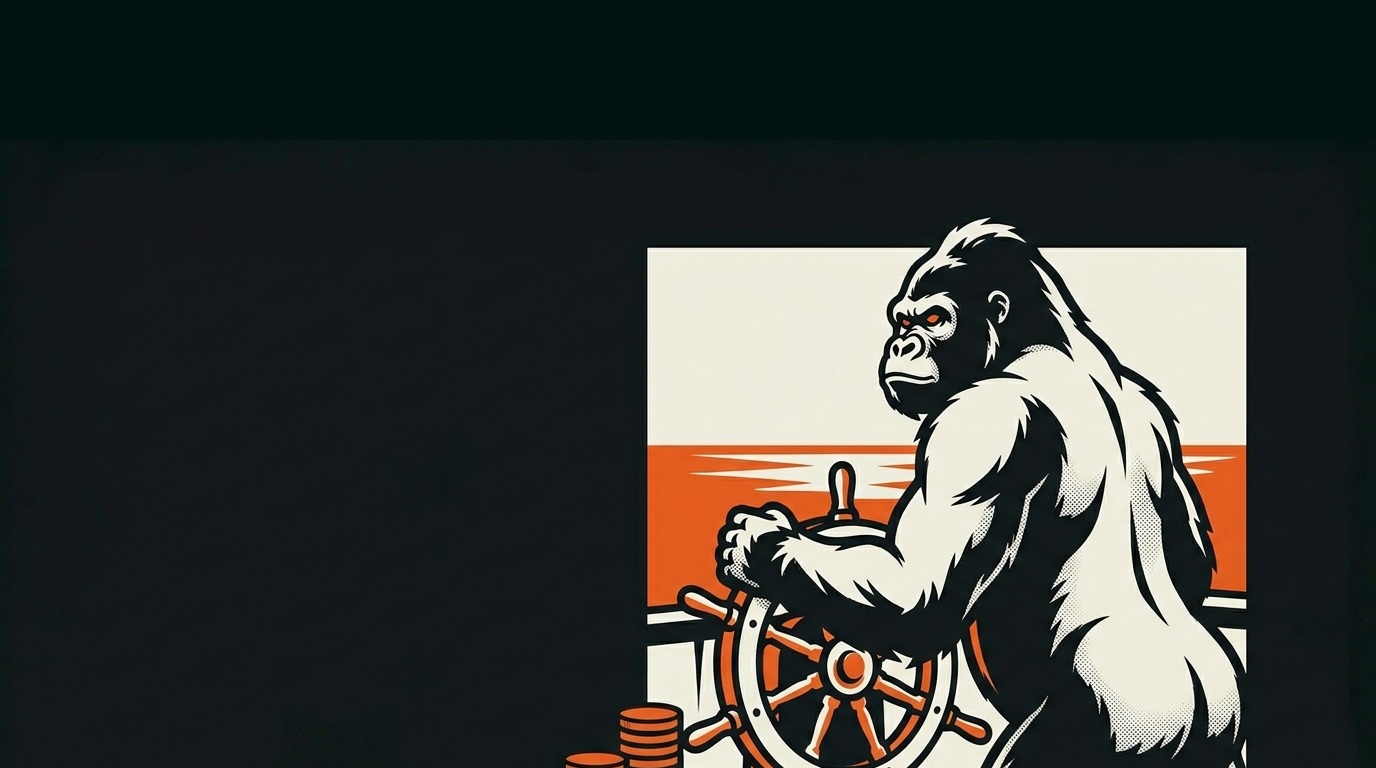
You Are the Captain
The Agentic Builders · Becoming an Agentic Animal · 8 of 10 · · 13 min read
Step 8 of Becoming an Agentic Animal. What to learn, why it matters, and how to do it with Tropo.
Every rung before this one handed you a capability. You learned how agents think, set up their world, gave them memory, built them a graph, organized their work, raised a crew, and learned to afford it. This rung hands you nothing new to build. It is about you, and the one thing no tool will ever give you: the posture of the person in charge. A crew is only as good as the captain running it, and captaincy is a craft. It is the rung the pillar promised would make you the animal, because everything up to here was building the ship. This is learning to sail it. And it comes down to less than you would think: of everything your crew now does, exactly two things stay yours.
What to learn
The captain's job is two things. Steps 1 through 7 built a crew that can choose its own path, do the work, and even check its own structural tests. That leaves you exactly two jobs, and they are the two a crew can never take off your hands: set the intent, and verify the outcome. You decide what good means and why. The crew decides how. You confirm that what came back is actually good. The front and the back are yours; the middle is theirs.
This is not a smaller job than doing everything yourself. It is a harder one, because it is the part that cannot be handed off. It is also, precisely, what this whole system is built around, lived at the scale of one person and one crew: the intent is the constraint you set, and the verification is the check that the crew stayed inside it. Everything else in this article, the gates, the attention, the way you treat people, is the craft of doing those two jobs well.
One: set the intent, then delegate the how. The instinct, when you finally have capable agents, is to tell them exactly what to do, step by step. Resist it. The way you get leverage out of a crew is the opposite: you state the goal and the why behind it clearly enough that the crew can choose its own path there, including when reality turns out different from your plan. You own the what and the why. They own the how. The moment you find yourself dictating every step, you have stopped being a captain and gone back to being a single operator with extra latency.
Two: verify the outcome; do not trust the report. An agent will tell you it is done. The report is not the work. The single most important habit of a good operator is going and looking at the actual running thing, the real output, the live state, instead of accepting the summary. "It says it passed" and "I watched it pass" are different kinds of knowledge, and the gap between them is where bad surprises live. I learned this the hard way and gave it a name once: a cardboard muffin looks exactly like a real one in the photo. You can't tell from the photo. You can only tell by taking a bite.
The craft of doing the two well. The next three habits are not extra jobs. Each one exists to make the two real.
Choose your gates; it is where you place the verification. You cannot watch everything, and you should not try. The skill is choosing your control points: the irreversible actions, the decisions only you can make, the places where a wrong move is expensive. At those points you stop the crew and decide. Everywhere else, you stay out of the way. A captain who approves every keystroke is a bottleneck wearing a hat; a captain who approves nothing is asleep at the wheel. The art is knowing which moments are which.
Protect your attention; it is the fuel the two jobs run on. You spent Step 7 learning to treat the agent's context as scarce. Here is the harder truth: your own attention is scarcer, and it is the one resource a crew cannot manufacture more of. Every interruption, every context-switch, every "quick look" has a cost, and the cost is the deep decisions you did not have the focus to make. Guarding your own attention is not indulgence. It is the highest-leverage thing a captain does.
Lead the people first; it is the manner you do all of it in. This is the one that sounds soft and is actually the foundation. You are not dispatching tasks to executors. You are leading a crew, of humans and of agents, and a crew runs on trust, clarity, and being seen, not on a queue of tickets. When the work is hard, and the real work always gets hard, the captain tends to the people before the problem. Do that and the crew gives you its best. Skip it and you get compliance, which is a much weaker thing.
Why it matters
Start with a number that should change how you think about control. In 1933 a management theorist named V. A. Graicunas worked out something uncomfortable: as the people reporting to you grow one at a time, the relationships you have to hold in your head grow almost geometrically. Two reports is not twice the load of one; six reports is not six times the load. He put the practical ceiling at around four or five before a single person simply cannot track it all. Your crew can already do more than you can personally watch. That is not a failure of discipline you can push through. It is a hard limit, and it is the reason "delegate the how" is not a nicety. It is the only way the math works.
Which is why the captain's job is intent, not instruction. The cleanest articulation of this comes from military doctrine, which has had to solve "coordinate many capable agents under a leader who cannot see everything" for centuries. They call it commander's intent: a leader gives "a clear and concise expression of the purpose of the operation and the desired end state" so that subordinates can "act to achieve the desired results without further orders, even when the operation does not unfold as planned." Read that last clause again, because it is the whole point. Plans break. A crew told what and why adapts; a crew told only how stalls the moment the plan meets reality.
But delegation without inspection is just hope, and here the warning is sharp and old. In 1983 Lisanne Bainbridge wrote a paper called "Ironies of Automation" that everyone running agents should read. Her finding: automating the routine work does not relieve the human operator. It leaves them the hardest residual judgments while quietly eroding the attention and skill needed to make them. She noted that it is "impossible for even a highly motivated human being to maintain effective visual attention towards a source of information on which very little happens, for more than about half an hour." The autopilot lulls you. So the captain does not monitor passively and trust; the captain inspects deliberately and verifies. This is the oldest move in operations, and Toyota gave it a name, genchi genbutsu, go and see for yourself. As the lean literature puts it bluntly: it is "unacceptable to take anything for granted or to rely on the reports of others." You walk the floor. With agents, the floor is the actual output, and the walk is opening it and looking.
The attention point has its own literature, because makers and managers have always been at war over it. Paul Graham's "maker's schedule, manager's schedule" named the cost: a single interruption "can blow a whole afternoon, by breaking it into two pieces each too small to do anything hard in." When you run a crew, you become a manager of attention, and the trap is to let the crew shred yours into reactive fragments. The captain who protects long blocks for the decisions only they can make gets more out of a crew than the one who is always available and never thinking.
And under all of it is the part that does not show up in any framework but decides everything: you are leading people. Robert Greenleaf, who coined the term, described the best leaders as servants first, leaders second, people whose instinct is to serve the team and the mission before themselves. It sounds out of place in a guide about software until you have actually run a crew through something hard and watched the difference between a team that trusts you and a team that merely obeys you. Person first, problem second, is not sentiment. It is the thing that makes the crew durable when the work gets brutal, which it will.
How to do it with Tropo
The studio is built to make those two jobs cheap, so a human can captain a crew without drowning. And the honest example is the one you are holding: this guide was captained into being exactly this way, and you can see the moves in how it got made.
You walk surfaces the studio renders for you. A captain cannot read three thousand files to check on the work, so the studio renders the work into surfaces a human can walk in seconds: the board that shows a project's true state, the graph that shows how it all connects. You scan the surface, and when something looks off, you drop to the real thing and look at it directly. That is genchi genbutsu made practical. The whole reason Steps 4 and 5 insisted on typed, queryable work was so that the captain's walk takes a minute instead of a morning.
You wire yourself into the loop at the gates, and nowhere else. The crew runs on the shared log from Step 6, and most of it flows agent to agent without you. But any step can be marked as one that cannot proceed until you, specifically, answer. In this studio that is one real gesture: an agent emits a single event onto the shared log and marks it reply-required, and the crew halts on it until you respond.
# An agent reaches a step it must not pass alone. It stops and asks you,
# by emitting one event onto the shared log, marked reply-required:
python3 vault/tools/tropo-emit-event.py --source /agents/argus --as argus \
 --type tropo.message.sent --subject <your-party-uid> \
 --lifecycle ephemeral --not-final \
 --data '{"reply_required": true,
 "headline": "Ready to deploy to production. This is irreversible.",
 "body": "All checks are green. I need your go before I ship."}'

# The crew stops here, and only here. You answer from your cockpit, and your
# reply correlates back to that exact event by its id:
# you -> "Go." (the gate clears; the crew proceeds)
# you -> "Hold. Walk it with me first." (you drop in and look at the real thing)
That single gate is the captain's whole relationship to the loop made concrete. The routine runs without you; the irreversible waits for you. You spend your scarce attention on the one decision that earns it, and the crew does not idle waiting for permission on the ninety-nine that do not.
You set intent and brakes, then let go. When you hand the crew real work, you do not script it. You give it the goal, the why, and the brakes from Step 6, and you let it choose the path. The discipline is to state the end state clearly and then genuinely step back, checking at the gates rather than hovering over every move.
This is not theory to me. Making this very guide, I did not write these articles; I captained them. I set the intent, "teach a serious person to run a crew, deep, real examples, no fluff", and the strategist on my crew, Metis, chose how to build each one. I walked every draft, block by block, and when something was wrong I said so and we fixed it. I made the calls only I could make: what the title should be, when a piece was good enough to lock, when to cut a redundancy. I caught things the reports got wrong by looking at the real output instead of the summary, more than once. And when the work got tangled, we tended to that before we tended to the next deliverable. That is the whole posture, and it produced what you are reading. None of it required me to write a paragraph or a line of code. It required me to captain.
Do this now
Run one task like a captain instead of an operator. Pick something real, and instead of telling your agent each step, tell it the goal and the why, hand it one clear constraint, and let it choose the path. Then do the part most people skip: when it comes back and says it is done, do not read the summary and move on. Open the actual thing it made and walk it yourself. Feel the difference between "it told me it worked" and "I saw it work." That difference, multiplied across everything your crew does, is the entire job. You are not the one doing the work anymore. You are the one who decides what good looks like and verifies that it is.
The next rung
You can captain a crew now: set intent, delegate, walk the work, protect your focus, lead the people. But there is one thing left that turns all of this from a nerve-wracking high-wire act into something you do with calm confidence. It is the reason you will hand real, important work to a crew and sleep fine, and the reason you will never let yourself get locked into someone else's platform again. It is trust, the earned kind, built on verification you can check and governance you can read. In Step 9, the last rung, you learn why you will never go back.
Your ambition has a studio. Let's build.
References
- Jeffrey K. Liker, The Toyota Way (2004), Principle 12, genchi genbutsu — "go and see for yourself"; it is "unacceptable to take anything for granted or to rely on the reports of others."
- U.S. Army, ADP 6-0, Mission Command (2019) — commander's intent lets subordinates "act to achieve the desired results without further orders, even when the operation does not unfold as planned" (the Auftragstaktik tradition).
- Lisanne Bainbridge, "Ironies of Automation," Automatica 19(6) (1983) — automating the routine leaves the operator the hardest judgments while eroding vigilance; sustained passive attention fails after about half an hour.
- Paul Graham, "Maker's Schedule, Manager's Schedule" (2009) — a single interruption can "blow a whole afternoon"; protect long blocks for hard work.
- V. A. Graicunas, "Relationship in Organisation" (1933) — relationships a manager must track grow geometrically with direct reports; a practical span-of-control ceiling around four or five.
- Robert K. Greenleaf, "The Servant as Leader" (1970) — the best leaders are "servant first"; lead the people, not just the tasks.